


Reef SquiD

CyberSec Software built w/ AI

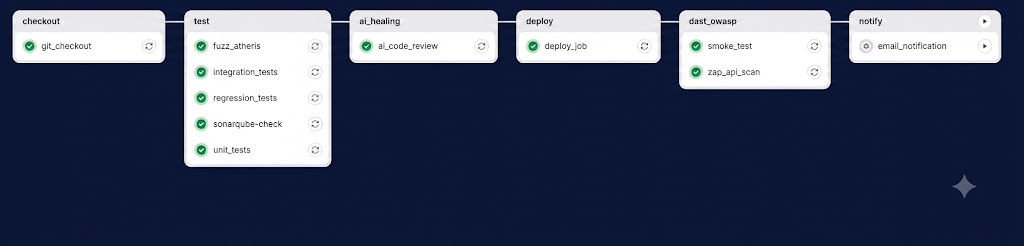
Squid Pipeline

CI/CD for:
● Gitlab
● Jenkins
● Github

* Pipeline Subscriptions and Post Setup Troubleshooting Not Included

SquidTest

Penetration Testing Toolkit

SquidTest


  • Reconnaissance

    • Function: Reveals internal IP addresses and access patterns. When misconfigured, SquidTest allows an attacker to pivot and perform initial network mapping against internal targets that are otherwise inaccessible.

  • Web Scanner

    • Function: Scans for common vulnerabilities (e.g., XSS, SQLi) by analyzing the requests funneled through the proxy.

  • Race Tester

    • Function: Executes high-speed, simultaneous requests to force and exploit race conditions and business logic flaws.

  • Network Analyzer

    • Function: Provides traffic logging for network flow monitoring and segmentation testing.

  • Cryptography

    • Function: Decrypts and allows inspection/modification of encrypted HTTPS traffic for security auditing.

  • Attacks

    • Function: Used to deliver and modify payloads (e.g., injection attacks)

find it before they do...

InSquident

Incident Response Software

InSquident

Incident Response (IR) software provides a centralized platform for security teams to manage and respond to cybersecurity threats like data breaches and malware attacks.

Think of it as the command center for a digital emergency. When a security alarm (like an alert from an IDPS) goes off, this software helps the team:

  • Organize: It logs the incident and tracks all related activity in one place.

  • Automate: It can automatically run predefined “playbooks” to handle common tasks, such as isolating an infected machine from the network or sending alerts to the right people.

  • Collaborate: It provides a central workspace for security analysts, IT, and legal teams to communicate and coordinate their response.

  • Resolve: It guides the team through the steps of containing the threat, eradicating it, and recovering normal operations.

  • Report: It documents every action taken, which is critical for post-incident analysis and for proving compliance with regulations.

Avoid fines.
Be Ready...

Coming Soon..

ReconnaSquid

Attack Surface...

ReconnaSquid

Reconnaissance is the initial phase of a cybersecurity assessment where an attacker or security team gathers information about a target to map its attack surface.

  • Autonomous System Numbers (ASNs):

    • Function: An ASN is a unique global identifier for a network or group of IP networks operated by a single entity (like a large corporation or ISP).

    • Reconnaissance Value: Checking a target’s ASN helps map its entire network presence and discover IP address ranges and infrastructure they own, which might contain unknown assets.

  • Cloud (Infrastructure Discovery):

    • Function: Identifying which assets are hosted on major public cloud providers (AWS, Azure, GCP, etc.).

    • Reconnaissance Value: This helps an attacker understand the target’s technology stack and potential misconfigurations in cloud services like exposed storage buckets or poorly secured cloud-specific APIs.

  • Subdomains:

    • Function: Discovering all subdomains associated with a target’s root domain.

    • Reconnaissance Value: Subdomains often host older, forgotten, or less-secured applications (known as “shadow IT”) which can serve as easy entry points for a primary attack.

  • App Analysis (Web Application Analysis):

    • Function: Analyzing live web applications found on subdomains and IPs to identify their technology stack (web server, framework, language), version numbers, and directory structure.

    • Reconnaissance Value: Revealing outdated software versions or exposed configuration files can quickly point to known vulnerabilities and potential attack vectors like Cross-Site Scripting (XSS) or SQL Injection.

Purple Ink Blog

Designed with Shopkeeper - Premium Wordpress Theme